There is a version of Malta that most people know before they ever arrive.
It is the Malta of summer: bright blue water, boats leaving the harbour in the morning, swimming spots, long lunches and evenings that seem to stretch on forever. It is beautiful, of course, and there is a reason so many people fall in love with the islands during the warmer months.
But when summer begins to fade, Malta reveals something else.
The pace becomes gentler. The intense heat disappears, the historic towns become easier to explore and the island starts to feel less like a holiday destination and more like a place where people actually live. By December, another transformation takes place as Christmas arrives, bringing lights, music, decorations and a sense of anticipation to the streets of Valletta.
And then there are the winter days themselves: sometimes bright and surprisingly mild, sometimes windy or rainy, but almost always offering a completely different experience from the crowded summer months.
This is Malta after the postcards have changed.
It is the season of long lunches, quiet streets, golden afternoons, Christmas evenings and walks beside the sea when much of Europe is already deep into winter.
When Malta Slows Down
Autumn does not arrive in Malta overnight. September still carries much of summer with it. The sea is warm, the days are long and there is every chance of spending an afternoon swimming. Yet something has already begun to change.
The extreme heat becomes easier to escape, and suddenly walking through a historic city for several hours feels much more enjoyable. You can explore Valletta without constantly searching for shade, wander through Birgu after lunch or spend an afternoon in Mdina without feeling that the weather is dictating your plans.
October continues that transition. The island is still unmistakably Mediterranean, but the days feel more comfortable and the atmosphere becomes less hectic. It is a wonderful time to combine the things Malta does so well: history, food, architecture, the coast and the simple pleasure of being outdoors.
By November, summer feels increasingly distant. The island is quieter, but there is still plenty happening. Museums, churches, restaurants, theatres and cultural venues continue their programmes, while the cooler weather makes it tempting to explore places that might have been too hot for a leisurely visit a few months earlier.
And somewhere during this period, you begin to notice the first signs of Christmas.
The Arrival of Christmas
It starts quietly.
A few decorations appear in a shop window. A Christmas tree goes up in a square. Lights are installed above a street. Churches begin preparing for the festive season.
Then, almost imperceptibly, Valletta changes.
The historic streets take on a warmer glow after sunset. Christmas decorations appear against the old architecture, and the city begins to feel festive without losing the character that makes it unmistakably Valletta.
For the 2026 season, Christmas in the Capital runs from 25 November to 31 December, with decorations, a Christmas tree, a nativity crib, performances, entertainment and activities taking place throughout the festive period.
But the programme is only one part of the experience.
The real charm is what happens when you simply walk through the city.
During the day, Valletta remains a fascinating place to explore. By late afternoon, the light begins to soften, and as darkness falls, the Christmas decorations gradually become the focus. Restaurants fill with people meeting for dinner, music can be heard around the city and the streets take on that unmistakable feeling that Christmas is close.
It is festive without being overwhelming.
And because Malta is Malta, the sea is never far away.
Christmas Without the Cold
For anyone accustomed to a northern European Christmas, Malta in December can feel almost surreal.
There may be no snow outside the window. You may not need a heavy winter coat. On a sunny afternoon, sitting outside with a coffee is still perfectly possible, and a walk along the waterfront can be one of the nicest parts of the day.
Yet the traditions of Christmas are very much present.
Nativity scenes are displayed across the islands, churches become important places of celebration and music, and families come together for the festive period. The Maltese presepju, or nativity scene, is a particularly important part of the Christmas tradition.
This combination of familiar traditions and an unfamiliar setting is what makes Christmas in Malta so appealing.
The decorations may remind you of home, but the landscape certainly does not.
Instead of snow-covered streets, there are old limestone buildings. Instead of frozen waterfronts, there is the Mediterranean. And instead of spending every December afternoon indoors, there is the possibility of going for a walk in the sunshine before returning to the festive atmosphere of the city in the evening.
It is still Christmas.
It simply looks different.
A December Evening in Valletta
Perhaps the best way to understand the appeal is to imagine an ordinary December evening.
The afternoon has been spent exploring the city. You have stopped somewhere for coffee, visited a church or museum and eventually found a restaurant for dinner.
Outside, it is dark now.
The Christmas lights are glowing above the streets, and the old buildings look different under the evening illumination. People are out meeting friends and family, visitors are taking photographs and there is music somewhere nearby.
You finish dinner but don’t immediately leave.
There is no reason to.
You walk through the city for a little longer, perhaps stopping for a drink before heading back towards the harbour.
It is one of those evenings that does not require an attraction or an itinerary.
The city itself is enough.
Christmas Markets, Music and Events
Malta’s Christmas markets are different from the huge markets associated with cities such as Vienna, Prague or Munich. They are generally smaller and more closely integrated into the towns and communities where they take place.
That is part of their charm.
The 2026 programme includes the Woodland Christmas Market from 4 to 13 December, while the wider festive calendar includes concerts, performances, exhibitions and family events across the islands.
For visitors, the best approach is not necessarily to build an entire holiday around Christmas events. Instead, let them become part of the trip.
A morning exploring Valletta can lead naturally into an afternoon market. An evening concert can follow dinner. A walk through the city can become an unexpected encounter with a local celebration.
It is these small combinations that make a winter trip feel spontaneous rather than scheduled.
Christmas Eve
Christmas Eve has its own atmosphere.
The excitement of the festive season is still there, but there is also a quieter sense of anticipation. Families prepare for Christmas, churches become busier and religious traditions become more visible.
For visitors, it is a lovely evening to slow down.
There is no need to fill every hour. A good dinner, a walk through Valletta and some time inside one of Malta’s historic churches can be enough.
The city feels different when you know that Christmas Day is only hours away.
Christmas Day in the Mediterranean
Christmas Day is naturally quieter, and restaurants and attractions may operate differently, so planning ahead is important.
But the quieter pace can be exactly what makes the day enjoyable.
A slow breakfast. A walk outside. A long Christmas lunch. Perhaps some time beside the harbour in the afternoon if the weather is kind.
There is no promise that Christmas Day will be sunny. Malta is still experiencing its winter, and rain and wind are possible. But when the weather does cooperate, there is something almost wonderfully strange about spending Christmas afternoon outdoors beneath a Mediterranean sky.
It is one of those small details that makes the experience stay with you.
The Quiet Days Between Christmas and New Year
The days between Christmas and New Year’s Eve are often overlooked when planning a festive holiday, but they can be some of the best.
The decorations remain. The festive atmosphere has not disappeared. At the same time, the intensity of Christmas Day has passed and there is time to explore.
This is an excellent period for places such as Mdina, Rabat and the Three Cities. Instead of trying to see everything in a single day, you can take your time. Stop for lunch. Sit down for coffee. Follow a street simply because it looks interesting.
Malta is small enough that spontaneous plans are easy.
And winter is perhaps the best season for making them.
New Year’s Eve Over the Grand Harbour
New Year’s Eve brings a completely different energy.
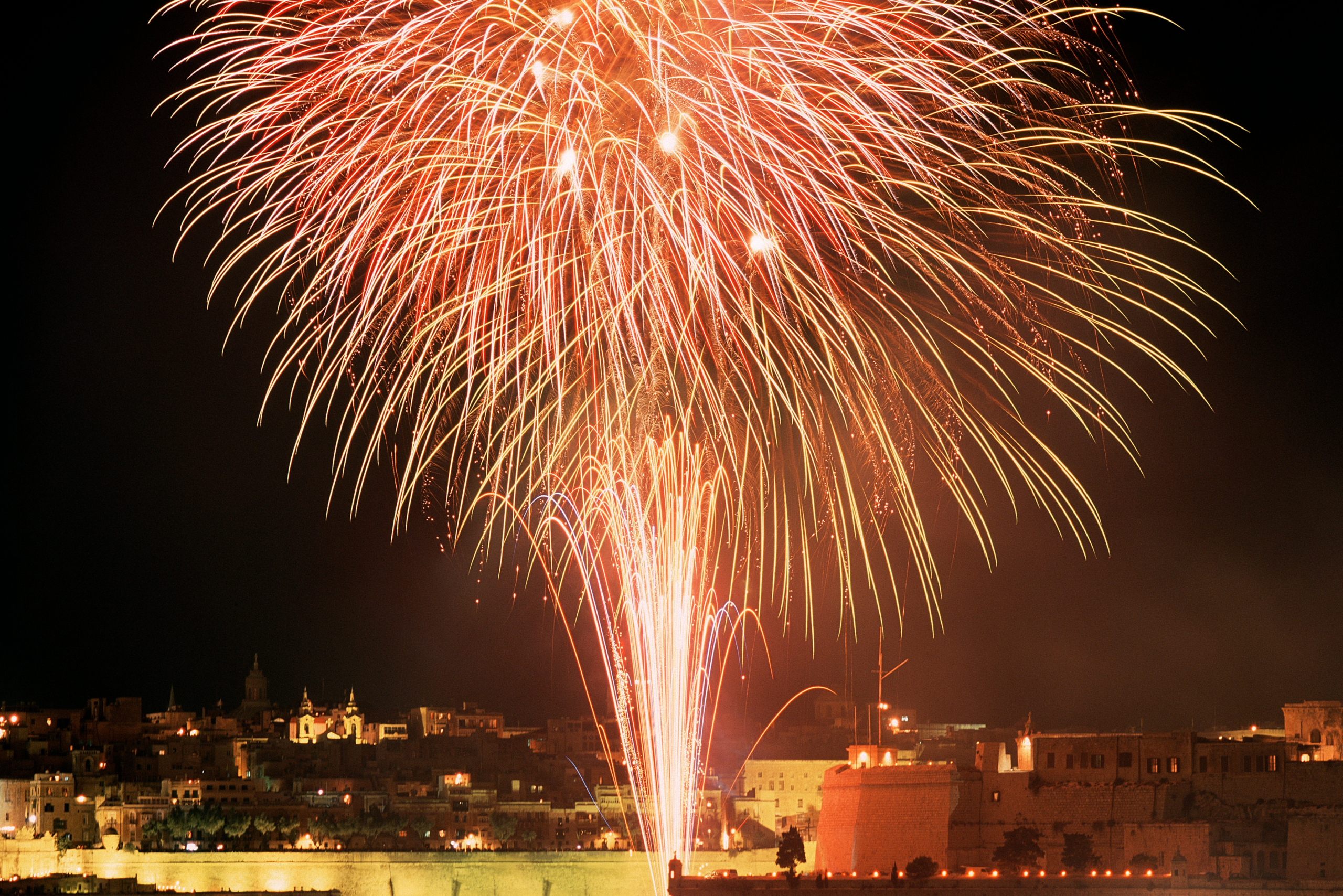
Valletta becomes the centre of the celebrations, with music, entertainment and crowds gathering for the countdown. The national celebrations scheduled for 31 December 2026 will take place in St George’s Square, with live performances and fireworks over the Grand Harbour.
There is something wonderfully dramatic about celebrating the end of the year in a historic city surrounded by the Mediterranean.
Dinner can begin the evening quietly before the streets become busier. As midnight approaches, the anticipation builds.
And then comes the countdown.
When the fireworks rise above the Grand Harbour, the old city, the water and the lights become one enormous backdrop.
It is a very different way to welcome a new year.
After the Fireworks
Then, almost as quickly as the celebrations arrived, Malta becomes quiet again.
January brings a slower rhythm.
The island is not empty, but the sense of urgency that comes with summer is gone. There is time for museums, historic sites, long lunches and walks. Valletta becomes a place to explore rather than somewhere to rush through between other activities.
The weather remains changeable. Some days can be windy or wet, while others are bright enough to make you forget that it is winter at all.
That unpredictability is part of travelling to Malta at this time of year.
You simply plan differently.
A rainy morning can become a museum day. A sunny afternoon can turn into a coastal walk. A cold evening can be an excuse for a long dinner somewhere you might otherwise have overlooked.
The Beauty of Malta in Winter
Winter also changes the way the island looks.
The landscape can become greener after the autumn and winter rains. The light is softer, and the low winter sun gives the old towns a different character.
The sea can look deep blue beneath a clear sky and almost silver when the weather changes.
There are days when the wind reminds you that it is winter, followed by an afternoon when you find yourself sitting outside in the sunshine wondering why you ever packed a coat.
That variety is part of the experience.
Malta in winter does not promise perfect weather.
It offers the possibility of beautiful weather without demanding that every day be perfect.
Gozo in the Cooler Months
Gozo is another place worth experiencing outside summer.
Without the pressure of beach weather, the island’s landscapes, villages and quieter rhythm become more important. Walking is generally more comfortable, the countryside can be particularly beautiful after the rains, and there is more time to appreciate the small details.
A visit to Gozo in winter is less about ticking off attractions and more about allowing the island to unfold slowly.
If your schedule allows, spending a night there can make the experience even more relaxed.
When the Weather Doesn’t Cooperate
Rain is part of winter in Malta, and it is worth accepting that from the beginning.
Fortunately, there is plenty to do indoors.
Valletta alone offers enough museums, churches, historic buildings, cafés and restaurants to fill several days. A rainy morning can become an opportunity to visit somewhere you might have skipped on a sunny day.
And when the clouds finally clear, you can simply step outside again.
The island is compact enough that you rarely have to sacrifice an entire day because of the weather.
Winter Is a Good Time to Eat
Food takes on a slightly different role in the cooler months.
Summer encourages quick lunches between swims and long evenings outside. In autumn and winter, there is more time for a proper meal.
Maltese food is particularly well suited to this slower rhythm. Local dishes, fresh fish, pasta, rabbit and traditional snacks become part of the experience rather than simply something to eat between sightseeing stops.
A day of exploring can end with a long dinner and a glass of Maltese wine. There is no need to rush afterwards.
That is one of the quiet luxuries of travelling outside the main season.
Staying Around the Grand Harbour
The place where you stay also becomes part of the experience.
During summer, being close to a beach might be the main priority. In winter, access to historic towns, restaurants, cultural attractions and transport becomes much more important.
The Grand Harbour is particularly well suited to this.
From Kalkara, Valletta and the Three Cities are close, while the area itself offers a quieter setting away from the busiest streets of the capital.
For guests staying with Front Row Malta, this creates a particularly pleasant balance during the cooler months. You can spend the day exploring Valletta, enjoy a Christmas concert or an evening out, and then return to the harbour and the quieter surroundings of Kalkara.
You are close to the action when you want it.
And away from it when you don’t.
That balance can make a winter stay feel less like a short city break and more like temporarily living in Malta.
What to Pack
There is no need to overthink your winter wardrobe.
Layers are the safest choice. Comfortable shoes are essential because Malta is best experienced on foot, while a light waterproof jacket and something warmer for evenings will cover most situations.
September and October can still be warm enough for swimming, so summer clothes and swimwear are worth packing. Later in the season, add a warmer layer.
And keep the sunglasses.
A bright Mediterranean winter day can be surprisingly beautiful.
Is Malta Worth Visiting in Winter?
If your only reason for visiting Malta is to spend every day on the beach, summer will naturally be the better choice.
But if what attracts you is the island itself – its cities, history, food, architecture, landscapes and atmosphere – winter offers a very different kind of holiday.
There is more time.
More space.
More opportunity to explore without feeling that you have to keep moving.
And then, in December, there is the added magic of Christmas.
The Malta You Take Home With You
Perhaps the nicest thing about travelling to Malta outside summer is that the memories are often not the ones you expected to make.
It might be the smell of coffee on a cool morning.
A quiet street in Birgu.
A sunny January afternoon that felt almost like spring.
The sound of church bells in December.
The first Christmas lights appearing in Valletta.
A long dinner after a day of exploring.
Or standing somewhere above the Grand Harbour on New Year’s Eve and watching fireworks spread across the sky.
These moments are smaller than the classic images of a Maltese summer, but they can stay with you for much longer.
Final Thoughts
Malta does not stop being beautiful when summer ends.
It simply becomes something different.
September and October still offer the warmth of the Mediterranean, but with a more comfortable pace. November brings quieter days and the first signs of Christmas. December transforms Valletta into a festive city, while Christmas itself offers a remarkable combination of familiar traditions and Mediterranean surroundings. New Year’s Eve brings the energy back before January and February return the island to a slower rhythm.
For travellers looking for something beyond the usual winter escape, that combination is difficult to replicate.
You can spend the afternoon exploring a centuries-old city, have dinner beneath Christmas lights and walk beside the sea afterwards. You can welcome the New Year beneath fireworks over the Grand Harbour and wake up the next morning to a much quieter Malta.
And perhaps that is the real beauty of winter here.
You are not coming to Malta to find the winter you already know.
You are coming to discover another one.
One with sea air instead of snow, golden stone instead of grey skies, long lunches instead of hurried days, and Christmas lights reflected in the Mediterranean.
A Malta that is quieter.
More intimate.
And perhaps, once you have experienced it, a little harder to forget.
Schreibe einen Kommentar