Malta is small. Your choice of where to stay still matters.
You can technically reach most places on the island from almost anywhere, but that doesn’t mean every location will give you the same holiday.
Stay in Valletta and you can walk out for dinner among centuries-old buildings. Choose Sliema and you’ll have ferries, buses, shops and restaurants close by. Stay in Mellieħa and the beaches become much easier to reach. Choose the Three Cities or Kalkara and you’ll experience a quieter, more historic side of the Grand Harbour.
So don’t just ask, „Where is the best place to stay in Malta?“
Ask instead: „What do I want my Malta holiday to feel like?“
This guide compares Malta’s main areas so you can choose a base that actually suits your trip.
Where to Stay in Malta at a Glance
| Area | Best if you want… | Atmosphere | Car needed? |
|---|---|---|---|
| Valletta | History, culture and walkability | Historic & atmospheric | No |
| Sliema | Convenience and connections | Modern & lively | No |
| St Julian’s | Restaurants and nightlife | Lively | No |
| Three Cities | History and character | Historic & quieter | No |
| Kalkara | Peace and harbour views | Local & residential | No |
| Mellieħa | Beaches and a relaxed holiday | Relaxed & resort-like | Helpful |
| St Paul’s Bay / Buġibba / Qawra | Value and resort facilities | Busy & casual | No |
| Mdina / Rabat | Romance and history | Historic & peaceful | Helpful |
| Marsaskala | A slower coastal atmosphere | Local & residential | Helpful |
| Gozo | Nature and getting away from it all | Rural & slow-paced | Recommended |
1. Valletta – Stay Here If You Want Malta’s History on Your Doorstep
Valletta is the obvious choice if you’re coming to Malta primarily for its history and architecture.
And there’s something special about staying here rather than simply visiting for the day.
In the morning, you can walk through quiet streets before the city gets busy. In the evening, you can have dinner surrounded by honey-coloured limestone buildings and wander home afterwards without worrying about transport.
St John’s Co-Cathedral, the Upper Barrakka Gardens, the Grandmaster’s Palace and many of the city’s museums are all within walking distance.
The catch? Valletta isn’t a beach destination, and accommodation in historic buildings can be surprisingly expensive for relatively small rooms.
Choose Valletta if:
- It’s your first trip to Malta
- You love history and architecture
- You don’t want to hire a car
- You enjoy restaurants and evening walks
- You’re staying for a few nights
My take: If you’re visiting Malta for a short city break, I’d seriously consider staying here.
2. Sliema – The Easy Choice
Sliema isn’t the most traditionally Maltese place to stay.
But it may be the easiest.
It’s modern, busy and practical, with a huge choice of accommodation, restaurants, cafés and shops. The ferry across the harbour to Valletta makes sightseeing particularly straightforward, and buses connect Sliema with much of the island.
There’s also the long waterfront promenade, where locals and visitors walk, run and swim.
The downside is exactly what makes Sliema convenient: it feels urban. If you’re dreaming of narrow medieval streets and historic houses, Valletta or the Three Cities will give you more character.
My take: If you want Malta to be easy rather than romantic, Sliema is hard to beat.
3. St Julian’s – For People Who Actually Want to Go Out
St Julian’s is where you should look if restaurants, bars and nightlife are important parts of your holiday.
The area changes quite dramatically depending on where you stay.
Paceville is the centre of Malta’s nightlife and can be loud late into the night. Around Spinola Bay and Balluta Bay, things are considerably more relaxed, with restaurants, cafés and waterfront walks.
That distinction matters.
If you’re not interested in clubbing, there’s little reason to stay directly in Paceville just because the hotel is cheaper.
My take: Great for nightlife. For a quiet holiday, I’d look elsewhere.
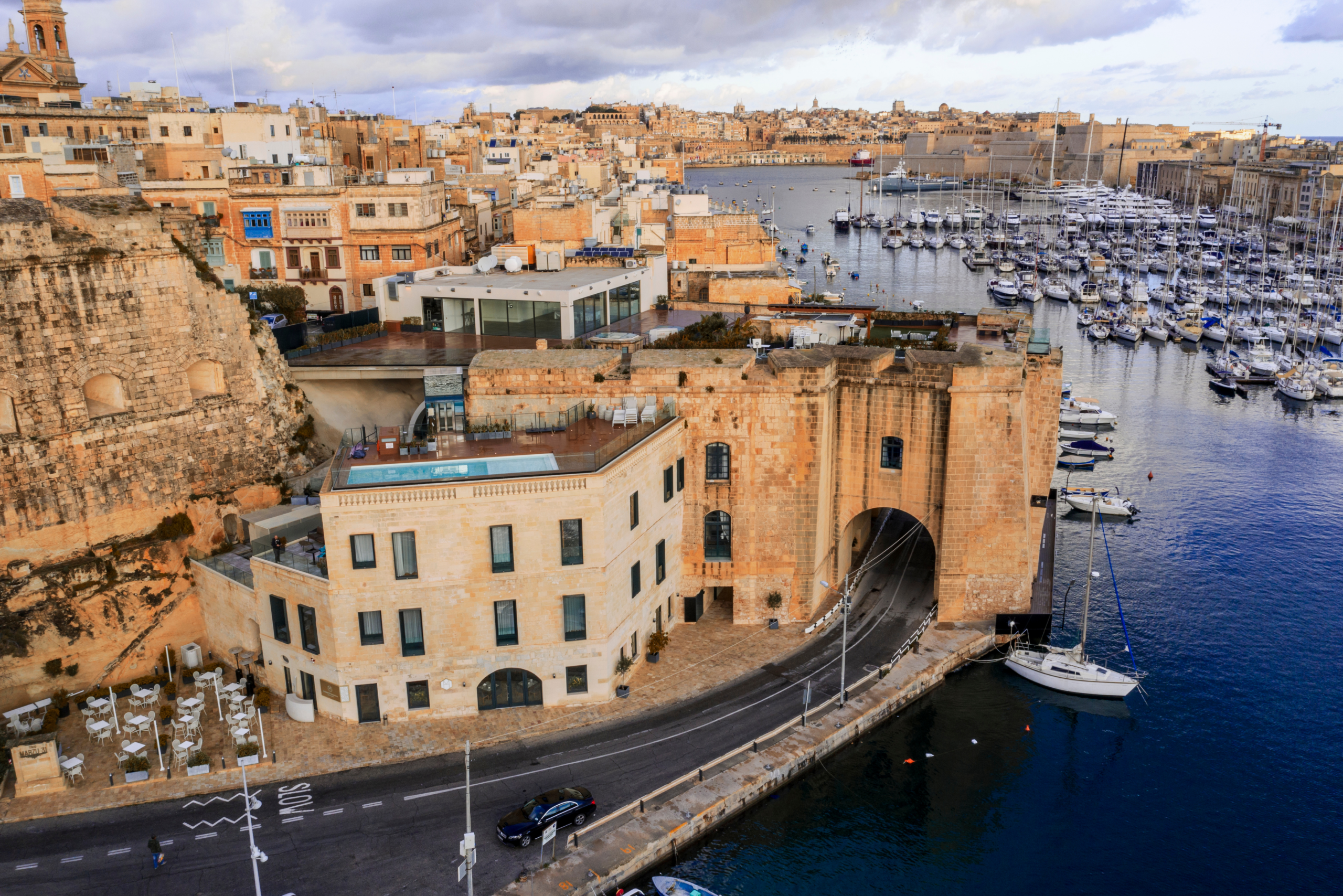
4. The Three Cities – For History Without the Valletta Crowds
Birgu, Senglea and Cospicua sit across the Grand Harbour from Valletta and offer a completely different atmosphere.
This is one of the areas I’d recommend to travellers who say:
„I want somewhere historic, but I don’t want to stay in the busiest part of Valletta.“
Birgu is particularly atmospheric, with narrow streets, old stone buildings and waterfront views.
You are still close to Valletta, and the ferry makes crossing the harbour part of the experience rather than a chore.
The accommodation selection is smaller than in Sliema or St Julian’s, but that’s part of the appeal.
My take: One of the best choices if you value character more than convenience.
You can explore the area further in our guide to the best things to do in Malta’s Three Cities.
5. Kalkara – Quiet, Local and Right by the Grand Harbour
Kalkara is a little different.
It doesn’t try to be a tourist centre, and that’s precisely why I think it is interesting.
The village sits on the edge of the Grand Harbour, close to the Three Cities and Valletta. Evenings are much quieter than in Sliema or St Julian’s, and the waterfront has a distinctly local feel.
You can also visit places such as Fort Rinella and Villa Bighi while staying close to the historic harbour area.
If you like the idea of being close to the action but sleeping somewhere peaceful, Kalkara deserves a look.
My take: Don’t choose Kalkara because you want nightlife or hundreds of restaurants. Choose it because you don’t.
If you’re considering staying here, our Ultimate Guide to Kalkara explains the area in more detail.
6. Mellieħa – When the Beach Matters Most
Mellieħa makes sense if you want your Malta holiday to include plenty of beach time.
Mellieħa Bay is one of Malta’s largest sandy beaches, and the surrounding area has a slower, more relaxed atmosphere than the central tourist areas.
The location is also useful for reaching the north of Malta, Gozo and Comino.
The trade-off is distance.
If you want to spend every day exploring Valletta and the south of the island, you’ll be travelling farther than you would from Sliema or Valletta.
My take: Excellent for a beach holiday. Less ideal as a sightseeing base if you plan to explore the entire island every day.
7. St Paul’s Bay, Buġibba and Qawra – Practical and Often Better Value
The northern resort area around St Paul’s Bay, Buġibba and Qawra is one of Malta’s biggest accommodation zones.
You’ll find plenty of hotels and apartments, restaurants, bars and waterfront facilities.
It’s not where I’d send someone looking for the most authentic historic Malta, but it can make a lot of sense if accommodation price, facilities and convenience matter more.
It’s also a useful base for boat trips towards Comino and Gozo.
My take: A practical resort choice, particularly for families and travellers watching their budget.
8. Mdina and Rabat – For Atmosphere Rather Than Convenience
Staying in or around Mdina is about atmosphere.
The medieval walled city is at its most beautiful once the crowds have disappeared. Streets that can feel busy during the day become remarkably quiet in the evening.
Rabat, just outside the walls, gives you more everyday local life and a wider choice of places to eat.
The downside is that you’re not on the coast and won’t have the same transport convenience as Valletta or Sliema.
My take: Wonderful for a romantic night or two. For a week-long first Malta trip, I’d probably choose somewhere more central.
9. Marsaskala – For a Slower, More Local Malta
Marsaskala is a coastal town in the southeast with a more residential character.
There are restaurants and cafés along the waterfront, and the town is a good base for exploring the southeastern part of Malta, including Marsaxlokk and the surrounding coastline.
It doesn’t have the concentration of sights or nightlife found in Valletta or St Julian’s.
That’s exactly the point.
My take: A good choice if you want to slow down and experience a more everyday side of Malta.
10. Gozo – When You Want a Different Pace Entirely
Gozo deserves a category of its own.
The island is greener, quieter and more rural than much of Malta. You can spend your days walking, swimming, exploring villages or simply sitting somewhere with a view and doing very little.
Traditional farmhouses are one of the most appealing accommodation options here.
The obvious disadvantage is geography. If you’re planning to spend most of your holiday visiting Valletta, Mdina and the Three Cities, staying on Gozo means adding ferry travel to your plans.
My take: Fantastic for slowing down. For a first three-day Malta trip, stay on the main island instead.
So, Where Should You Actually Stay?
If you’re overwhelmed by the choice, start here.
You want the classic first-time Malta experience
Valletta
Stay here if history, architecture, restaurants and walking matter most.
You want the easiest base
Sliema
Choose it for transport, restaurants, shops and the ferry to Valletta.
You want historic surroundings but fewer tourists
The Three Cities or Kalkara
Both give you Grand Harbour views and a more local atmosphere.
You want beaches
Mellieħa
Especially if swimming and beach days are central to your holiday.
You want nightlife
St Julian’s
But check the exact location of your accommodation.
You want romance and quiet
Mdina, Rabat or Gozo
Each offers a different version of a slower Malta experience.
You want a resort holiday
Mellieħa or St Paul’s Bay / Buġibba / Qawra
You’ll have more resort-style accommodation and facilities.
Is Valletta or Sliema Better?
This is probably the most common choice visitors have to make.
The short answer is:
Valletta has more character. Sliema has more convenience.
Choose Valletta if you want to step outside your accommodation and immediately be surrounded by history.
Choose Sliema if you want more accommodation choices, easy transport, shopping and a large selection of restaurants.
If you’re only staying for two or three nights, I’d lean towards Valletta.
For a longer trip where you’re using Malta as a base for day trips, Sliema becomes increasingly attractive.
Can You Explore Malta Without a Car?
Yes.
You don’t need a car for a Malta holiday, particularly if you stay in a well-connected area.
Valletta and Sliema are the easiest bases for travellers relying on public transport. The Three Cities and St Julian’s can also work well.
A car becomes more useful when you want to explore remote beaches, smaller villages and parts of the island where public transport is less convenient.
One thing to remember: Malta may be geographically small, but traffic can make journeys surprisingly slow.
Should You Stay in One Place or Move Around?
For most visitors, one base is enough.
If you’re staying three to seven nights, moving hotels can create more hassle than it’s worth.
Instead, choose a location that gives you reasonable access to the places you want to visit.
A split stay becomes more worthwhile for longer trips.
For example, you could spend several nights around Valletta or the Three Cities and finish with a few nights on Gozo.
That way, the change of accommodation actually gives you a different experience rather than simply moving your suitcase.
What I Would Choose
If I were planning a first Malta trip, my choice would depend on the trip itself.
Two or three nights: Valletta.
Five to seven nights without a car: Sliema or Valletta.
A quieter, more atmospheric stay: Three Cities or Kalkara.
A beach holiday: Mellieħa.
Nightlife: St Julian’s.
A slow, relaxing holiday: Gozo.
And if you’re staying longer and want to experience Malta beyond the obvious tourist centres, I’d seriously consider spending some of the trip around the Grand Harbour.
The Three Cities and Kalkara are close enough to Valletta to be practical, but feel noticeably different once the day gets quiet.
Frequently Asked Questions
What is the best area to stay in Malta?
For a first visit, Valletta and Sliema are the easiest choices. Valletta is better for history and atmosphere, while Sliema is more practical and better connected.
Where should I stay in Malta without a car?
Valletta and Sliema are the most convenient choices. The Three Cities and St Julian’s can also work well depending on your itinerary.
What is the best place to stay in Malta for beaches?
Mellieħa is one of the best choices because of its proximity to Mellieħa Bay and the beaches of northern Malta.
Where should couples stay in Malta?
Valletta, the Three Cities, Mdina and Gozo are all good choices. The best one depends on whether you want history, harbour views or peace and nature.
Where should families stay in Malta?
Mellieħa is a strong choice for families who want beaches and a relaxed atmosphere. Sliema and the northern resort areas are also practical.
Is Valletta expensive to stay in?
It can be. Valletta accommodation ranges from guesthouses and apartments to luxury hotels, but historic properties often have smaller rooms and can command higher prices because of their location.
Is Sliema a good place to stay?
Yes, especially if convenience is important. Sliema has excellent transport connections, plenty of restaurants and shops, and easy access to Valletta.
Is Gozo better than Malta for a holiday?
Not necessarily. Gozo is quieter and more rural, while the main island offers easier access to Valletta, the Three Cities, Mdina and many of Malta’s major attractions. For longer trips, combining both can be ideal.
Final Thoughts
There is no single best place to stay in Malta.
And that’s actually good news.
You can choose a historic capital, a lively waterfront, a quiet harbour village, a sandy-beach resort or a farmhouse on a smaller island — all within a relatively small area.
The trick is to choose the place that matches your holiday, rather than simply booking the most popular tourist area.
For history and atmosphere, choose Valletta.
For convenience, choose Sliema.
For character, look towards the Three Cities and Kalkara.
For beaches, head north.
For a slower pace, consider Gozo.
Wherever you stay, Malta is small enough that you can explore far beyond your own neighbourhood.
Schreibe einen Kommentar