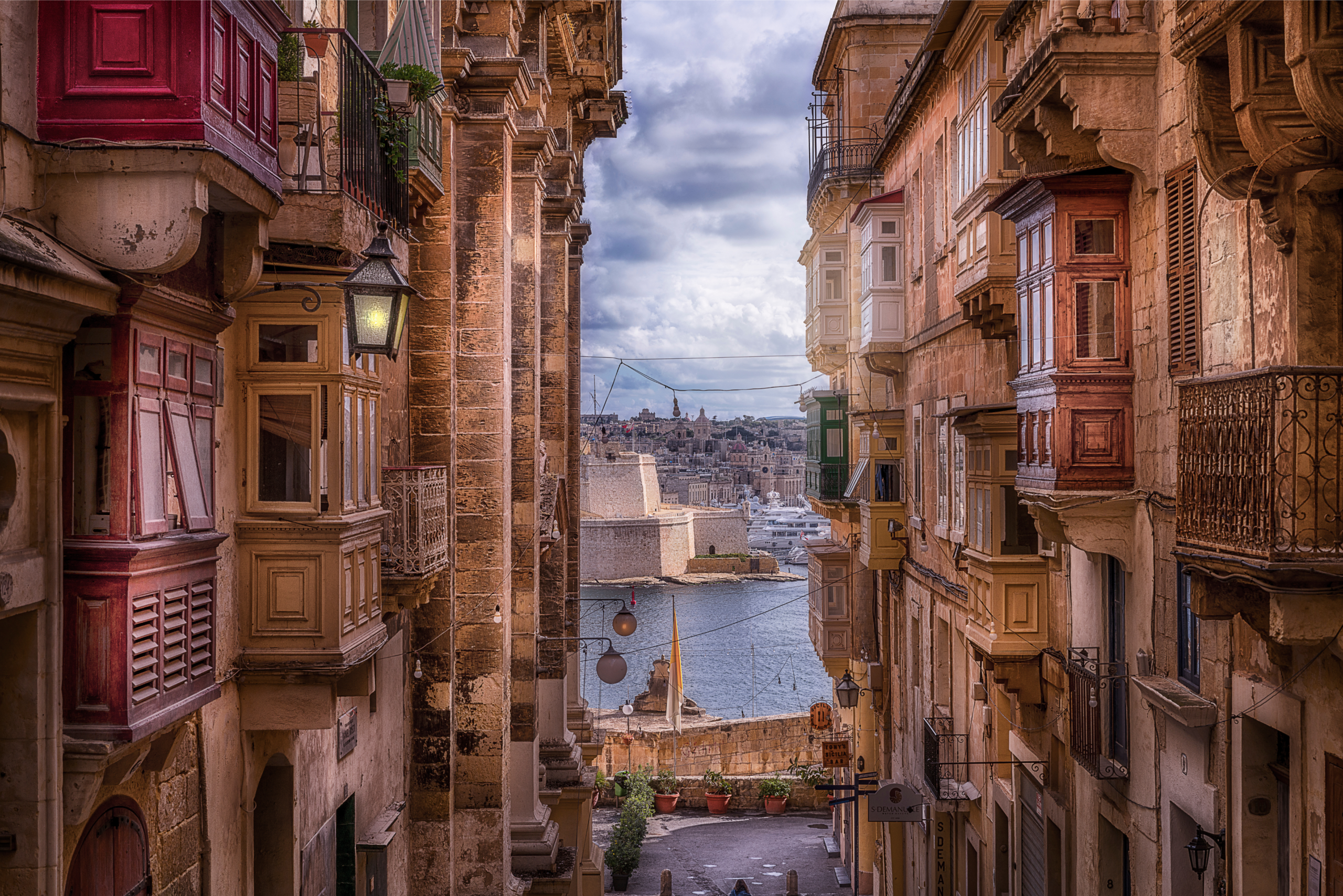
Valletta may be one of Europe’s smallest capital cities, but there is an extraordinary amount to discover within its compact streets.
Built by the Knights of St. John after the Great Siege of 1565, Malta’s capital is a city of golden limestone buildings, grand churches, historic palaces, lively cafés and spectacular views across the Mediterranean and the Grand Harbour.
What makes Valletta particularly special is how easy it is to explore on foot. Within a few minutes, you can walk from a busy shopping street to a quiet side alley, from a centuries-old church to a harbour viewpoint, or from a traditional Maltese bakery to a waterfront restaurant.
For first-time visitors, however, deciding what to see and how to organise your time can be difficult. Valletta has far more to offer than its most famous attractions.
This complete Valletta travel guide covers the best things to do, the city’s history, the most beautiful viewpoints, places to eat, practical travel information and tips for making the most of your visit.
Why Visit Valletta?
Valletta is one of the best places in Malta to experience the island’s history and culture in a relatively small area.
The city is a UNESCO World Heritage Site and contains an extraordinary concentration of historic monuments. Its streets were designed as part of a planned fortified city, while its buildings reflect Malta’s long relationship with the Knights of St. John, the Mediterranean and the British Empire.
But Valletta isn’t simply an open-air museum.
Today, the city combines historic architecture with modern restaurants, independent cafés, wine bars, shops, galleries and a lively cultural scene. During the day, the streets can be busy with visitors, while evenings often reveal a calmer and more atmospheric side of the capital.
Whether you have one day in Malta or several weeks to explore the island, Valletta deserves a place on your itinerary.
A Brief History of Valletta
To understand Valletta, it helps to know why the city was built.
The Knights of St. John arrived in Malta in the sixteenth century and established themselves around the Grand Harbour. In 1565, the island was attacked by the Ottoman Empire during what became known as the Great Siege of Malta.
Following the siege, the Knights decided to construct a new fortified city on the Sciberras Peninsula.
Construction began in 1566 under the direction of Grand Master Jean Parisot de Valette, after whom the city was named.
The new capital was designed according to a remarkably organised plan, with straight streets, strong defensive walls and impressive public buildings.
Over the centuries, Valletta developed further under the Knights, later came under French rule and eventually became an important centre of the British Empire.
Today, these different periods of history are visible throughout the city.
You can see grand Baroque churches, military fortifications, British-era architecture and traditional Maltese buildings all within a relatively small walking distance.
The Best Things to Do in Valletta
There is no single correct way to explore Valletta. Some visitors focus on history and museums, while others prefer cafés, architecture, shopping and simply wandering through the streets.
If it is your first visit, however, the following attractions and experiences should be near the top of your list.
1. Explore St. John’s Co-Cathedral
St. John’s Co-Cathedral is arguably Valletta’s most spectacular interior.
From the outside, the building looks relatively restrained compared with some of Malta’s other churches. Inside, however, it is extraordinarily elaborate.
The cathedral was built by the Knights of St. John in the sixteenth century and is decorated with marble floors, gilded details, paintings and ornate Baroque architecture.
One of its most famous treasures is Caravaggio’s monumental painting The Beheading of Saint John the Baptist, completed in 1608.
The cathedral can become busy, particularly during the main tourist season, so arriving earlier in the day can make the experience more enjoyable.
Allow at least an hour to explore the cathedral and its adjoining museum.
2. Walk Along Republic Street
Republic Street is Valletta’s main pedestrian thoroughfare and runs through the heart of the city.
It connects many of Valletta’s most important landmarks and is an excellent starting point for exploring the capital.
Along the way you’ll find historic buildings, cafés, shops, churches and small side streets leading towards the city’s fortifications.
Don’t simply walk from one attraction to another. Take time to explore the streets branching away from Republic Street. Some of Valletta’s most interesting architectural details can be found away from the main tourist route.
3. Visit the Upper Barrakka Gardens
The Upper Barrakka Gardens offer one of the most famous views in Malta.
From the elevated gardens, you can look across the Grand Harbour towards the Three Cities, including Birgu, Senglea and Cospicua.
The view is particularly impressive in the late afternoon when the limestone buildings are illuminated by warm sunlight.
The gardens are also a convenient place to take a break from sightseeing. Find a bench, enjoy the view and watch the boats moving through the harbour below.
If you’re visiting the Three Cities as well, the Upper Barrakka Gardens provide an excellent introduction to the geography of the Grand Harbour.
4. Discover the Lower Barrakka Gardens
The Lower Barrakka Gardens are smaller and generally quieter than the Upper Barrakka Gardens.
Located closer to the waterfront, they provide another beautiful perspective over the Mediterranean and the entrance to the Grand Harbour.
The atmosphere here is more peaceful, making it a good place to escape the busiest streets of central Valletta.
The gardens are particularly pleasant around sunset.
5. Explore the Grandmaster’s Palace
The Grandmaster’s Palace is one of Valletta’s most historically important buildings.
It was originally built as the residence of the Grand Masters of the Order of St. John and later served as the official residence of British governors and Malta’s presidents.
The palace reflects the political importance of Valletta throughout the centuries.
Visitors can explore historic rooms and state interiors, although opening arrangements can vary depending on official events.
Check current visitor information before planning your visit.
6. Wander Through Valletta’s Side Streets
One of the best things to do in Valletta costs absolutely nothing.
Simply walk.
Leave Republic Street and explore the quieter streets running towards the harbour.
You’ll discover traditional Maltese balconies, colourful doors, old stone façades, small shrines and architectural details that are easy to miss when following a strict sightseeing itinerary.
This is also where you’ll get a better sense of Valletta as a living city rather than simply a tourist attraction.
Take your time and allow yourself to get slightly lost.
Some of the most memorable moments in Valletta happen when you aren’t looking for a particular landmark.
7. Visit the National Museum of Archaeology
The National Museum of Archaeology is one of the best places to understand Malta’s extraordinary prehistoric history.
Malta’s islands were home to advanced prehistoric communities thousands of years before the Phoenicians, Romans or Knights of St. John arrived. The museum brings this history together through artefacts discovered across Malta and Gozo.
Among the most famous objects is the Sleeping Lady, a small prehistoric figurine discovered at the Ħal Saflieni Hypogeum.
The museum is relatively compact, making it an easy addition to a day of exploring Valletta.
If you’re planning to visit Malta’s megalithic temples or the Hypogeum, visiting the museum first can also provide useful context.
8. Explore the National War Museum at Fort St. Elmo
At the tip of Valletta’s peninsula stands Fort St. Elmo, one of the city’s most important defensive landmarks.
The fort played a crucial role during the Great Siege of 1565 and has continued to serve a military purpose throughout Malta’s history.
Today, the National War Museum explores Malta’s military history from prehistoric times through the Knights of St. John and the British period to the twentieth century.
The fort itself is worth exploring even beyond the museum. Its elevated position provides excellent views over both sides of the peninsula and the surrounding Mediterranean.
Allow at least one to two hours if you want to explore the fort and museum properly.
9. See the Siege Bell War Memorial
Near the Lower Barrakka Gardens stands the Siege Bell War Memorial, overlooking the Grand Harbour.
The large bell commemorates those who lost their lives during the Second World War and forms part of one of Valletta’s most atmospheric viewpoints.
The location is particularly peaceful compared with some of the busier parts of the city.
It is worth combining a visit with the Lower Barrakka Gardens and a walk along the surrounding fortifications.
10. Walk Along the Valletta Waterfront
Although technically outside the historic centre, the waterfront is an excellent place to experience the Grand Harbour.
The area is particularly popular when cruise ships arrive, but it can also be a pleasant place for an evening walk when the harbour lights begin to appear.
Restaurants and cafés along the waterfront provide opportunities to stop for a meal or drink while watching boats move through the harbour.
For a different perspective of Valletta, consider arriving or leaving by boat rather than travelling entirely by road.
11. Take a Traditional Harbour Boat
One of the most enjoyable ways to see Valletta is from the water.
Traditional Maltese boats, including colourful dgħajsa, have been used around the Grand Harbour for generations.
A short harbour crossing gives you a completely different perspective of Valletta’s massive fortifications and historic skyline.
You can also explore the harbour by organised boat tour, depending on the season and weather conditions.
For photographers, the water offers some of the best views of Valletta’s limestone walls and the Three Cities.
12. Explore Valletta’s Churches
St. John’s Co-Cathedral may be the most famous church in Valletta, but it is far from the only one worth seeing.
The city contains numerous churches representing different communities, religious orders and periods of Maltese history.
Look beyond the most famous buildings and explore smaller churches as you walk through the city.
Many have richly decorated interiors despite their modest exterior appearance.
Remember that these are active places of worship. Dress respectfully and check visiting rules before entering.
13. Visit Casa Rocca Piccola
Casa Rocca Piccola offers a more personal insight into Valletta’s history.
Unlike the city’s grand public buildings, this historic private palace provides an opportunity to see how an aristocratic Maltese family lived.
The interiors include period furniture, paintings and household objects, while parts of the building’s underground shelters provide a glimpse into life during the Second World War.
Guided tours are available and can make the visit considerably more interesting because of the stories connected to the building and its former residents.
14. Stop at Strait Street
Strait Street has undergone a remarkable transformation.
Historically associated with sailors and nightlife, the narrow street later became one of Valletta’s more neglected areas. Today it has developed into a lively destination for restaurants, wine bars and evening entertainment.
Its narrow proportions and historic buildings give it a distinctive atmosphere after dark.
It’s a particularly good area to explore if you want to experience Valletta beyond traditional sightseeing.
15. Enjoy a Traditional Maltese Pastizzi
No visit to Valletta is complete without trying a pastizz.
This inexpensive Maltese pastry is traditionally filled with either ricotta or a seasoned pea mixture and is one of the country’s most recognisable snacks.
Pastizzi are ideal for a quick breakfast, afternoon snack or inexpensive lunch while sightseeing.
Pair one with a traditional Maltese drink or coffee and you’ve experienced one of the simplest pleasures of local food culture.
16. Discover Maltese Food in Valletta
Valletta has developed into one of Malta’s best destinations for food.
You can find traditional Maltese dishes alongside Mediterranean cuisine, modern restaurants, cafés, bakeries and international food.
If you want to experience local flavours, look for dishes such as rabbit stew, ġbejna, bigilla, imqarrun il-forn and fresh seafood.
Don’t feel that you need to choose the most expensive restaurant. Some of the most memorable meals can be found in smaller family-run establishments.
17. Watch the City Change at Sunset
Valletta becomes particularly atmospheric in the late afternoon.
The warm limestone façades catch the evening sunlight, the streets become less crowded and the Grand Harbour begins to glow.
The Upper Barrakka Gardens, Lower Barrakka Gardens and harbour-facing streets are excellent places to enjoy the changing light.
If you’re staying overnight, don’t rush back to your accommodation after sunset. Valletta has an entirely different character once the day visitors begin to leave.
18. Experience Valletta After Dark
Valletta is not only a daytime destination.
Restaurants, wine bars, theatres and cultural venues give the city plenty of life in the evening.
The streets around Strait Street and the central squares are particularly lively, while quieter side streets offer a more relaxed atmosphere.
For couples, an evening walk through the illuminated streets followed by dinner is one of the simplest and most enjoyable ways to experience the capital.
19. Shop for Local Products
Valletta is a good place to look for locally produced souvenirs and gifts.
Instead of buying generic tourist products, look for Maltese crafts, ceramics, jewellery, handmade food products, local wines and traditional items.
Republic Street and the surrounding streets contain many shops, but independent boutiques are often more interesting than large souvenir stores.
20. Simply Enjoy Valletta
Perhaps the most important recommendation is also the simplest: don’t try to see everything.
Valletta is compact enough that you can cover many major attractions in a day, but rushing between them can take away from the experience.
Sit in a square with a coffee. Watch local life. Explore a side street. Stop for a pastizz. Look across the harbour.
The character of Valletta isn’t found only inside its museums and historic buildings. It is found in the everyday life happening between them.
That is what makes the city worth returning to.
How Many Days Do You Need in Valletta?
One day is enough to see many of Valletta’s main attractions, but spending more time allows you to experience the city at a much slower pace.
One Day in Valletta
If you only have one day, start in the morning and focus on the historic centre.
A good itinerary could include:
- St. John’s Co-Cathedral
- Republic Street
- Grandmaster’s Palace
- Upper Barrakka Gardens
- Lower Barrakka Gardens
- Fort St. Elmo
- A traditional Maltese lunch
- An evening walk through Valletta
This gives you a good introduction to the city’s history, architecture and atmosphere.
Two Days in Valletta
With two days, you can slow down and visit more museums and historic buildings.
Spend your first day exploring the main landmarks and historic centre.
Use your second day for places such as the National Museum of Archaeology, Casa Rocca Piccola, Fort St. Elmo and the harbour area.
You’ll also have more time to enjoy cafés, restaurants and Valletta’s quieter streets.
Three Days or More
Three days gives you plenty of time to explore Valletta without rushing.
You can also use the city as a base for nearby attractions, including the Three Cities, the harbour and other parts of Malta.
If you enjoy history, architecture and food, three days can easily be justified.
How to Get to Valletta
Valletta is one of the easiest destinations in Malta to reach.
By Bus
Malta’s public bus network connects Valletta with many towns and tourist areas across the island.
The main bus terminal is located just outside the City Gate, making it particularly convenient for visitors.
Buses are affordable, although journey times can vary considerably depending on traffic.
By Ferry
Ferries are an excellent option when travelling from Sliema or the Three Cities.
The journey is not only practical but also gives you beautiful views of Valletta and the Grand Harbour.
If you’re staying in Sliema, taking the ferry to Valletta is often more enjoyable than travelling by road.
By Taxi or Ride-Hailing App
Taxi and ride-hailing services are widely available in Malta.
Bolt, Uber and eCabs can be useful if you’re travelling with luggage, returning late at night or visiting from an area that is not directly connected by bus.
By Car
Driving to Valletta is possible, but it isn’t always the easiest option.
Traffic can be heavy, and parking inside or immediately around the historic centre is limited.
If you’re renting a car, consider using one of the larger parking areas outside the central streets and continuing on foot.
For most visitors, public transport, ferries or taxis are more convenient.
Best Time to Visit Valletta
Valletta can be visited throughout the year, but the experience changes significantly between seasons.
Spring
March through May is one of the most comfortable periods for exploring Valletta.
Temperatures are generally pleasant for walking, the island is becoming greener and visitor numbers are lower than during the peak summer months.
Summer
June through September is the busiest period.
The weather is hot and sunny, outdoor restaurants are lively and Valletta has a vibrant atmosphere.
However, sightseeing during the middle of the day can become uncomfortable, particularly in direct sunlight.
Start early, take breaks during the afternoon and continue exploring in the evening.
Autumn
September and October can be excellent months for visiting.
The summer heat begins to decrease, while the sea remains warm enough for swimming.
Crowds also tend to become smaller.
Winter
Malta’s winters are mild compared with much of Europe.
December through February can bring occasional rain and windy days, but there are also many sunny periods.
Winter is particularly appealing if your main interests are history, museums, architecture and food rather than swimming.
Is Valletta Expensive?
Valletta offers options for a wide range of budgets.
You can spend very little by exploring the streets, gardens and viewpoints for free and eating at bakeries or casual cafés.
At the same time, the city has plenty of high-end restaurants, boutique hotels and luxury experiences.
A sensible budget depends largely on your accommodation and dining choices.
One advantage of Valletta is that many of its most rewarding experiences — walking through the historic streets, visiting viewpoints and enjoying the architecture — cost little or nothing.
Where to Stay When Visiting Valletta
Staying inside Valletta is ideal if you want to be close to restaurants, historic attractions and evening activities.
However, it isn’t the only option.
The surrounding areas offer very different experiences and can sometimes provide better value or a quieter atmosphere.
Sliema is popular for its waterfront, restaurants and shopping, while St. Julian’s is known for nightlife and a lively tourist atmosphere.
For travellers who prefer a quieter and more authentic setting, Kalkara and the Three Cities are particularly interesting.
Kalkara is located directly across the Grand Harbour from Valletta and provides easy access to Birgu, Senglea and Cospicua.
If you’re deciding which part of Malta is best for your stay, read our guide:
Where to Stay in Malta: Valletta, Sliema, St. Julian’s or Kalkara?
Practical Tips for Visiting Valletta
Wear Comfortable Shoes
Valletta is best explored on foot.
The streets are often paved with stone, and there are steps and inclines throughout the city. Comfortable footwear will make a noticeable difference.
Start Early
Arriving early allows you to explore the main streets before they become busy.
It is also the best time for photography because of the softer light.
Take Breaks
Don’t try to visit every attraction without stopping.
Valletta is a city best enjoyed slowly. Take time for coffee, lunch or simply sitting in one of the city’s squares.
Bring Water
During summer, temperatures can become very high.
Carry a reusable water bottle and take regular breaks, particularly if you’re walking around the fortifications.
Check Opening Times
Museums, churches and historic buildings can have different opening hours depending on the season, public holidays or special events.
Always check current information before visiting a specific attraction.
Is Valletta Suitable for Families?
Yes. Valletta can be a very enjoyable destination for families.
Children may particularly enjoy the fortifications, harbour views, traditional boats and museums with interactive or visual exhibits.
However, families should be prepared for steps, uneven stone surfaces and hot summer temperatures.
A relaxed itinerary with plenty of breaks is usually better than trying to visit every attraction in one day.
Is Valletta Worth Visiting?
Absolutely.
Valletta combines history, architecture, food and Mediterranean atmosphere in a remarkably compact area.
You can explore a sixteenth-century cathedral in the morning, eat traditional Maltese food for lunch, walk along historic fortifications in the afternoon and watch the sunset over the Grand Harbour in the evening.
Few European capitals offer such a concentrated combination of history and everyday life.
For first-time visitors to Malta, Valletta should be considered an essential part of the itinerary.
Frequently Asked Questions About Valletta
Is Valletta worth visiting?
Yes. Valletta is one of Malta’s essential destinations and combines historic architecture, museums, churches, restaurants, cafés and spectacular harbour views within a very compact area.
Even if you only have a few hours, you can experience many of the city’s highlights on foot.
How long do you need in Valletta?
One full day is enough to see many of the major attractions, but two days allow you to explore the museums, historic buildings and side streets at a more relaxed pace.
If you’re particularly interested in history, architecture and food, three days can easily be worthwhile.
What is Valletta famous for?
Valletta is famous for its history, fortifications, Baroque architecture, St. John’s Co-Cathedral, the Grand Harbour and its connection to the Knights of St. John.
The entire historic city is also recognised as a UNESCO World Heritage Site.
Can you walk around Valletta?
Yes. Walking is the best way to explore Valletta.
The historic centre is compact and many major attractions are within walking distance of one another.
Comfortable shoes are recommended because some streets are steep and there are numerous steps.
What should I not miss in Valletta?
For a first visit, don’t miss St. John’s Co-Cathedral, the Upper Barrakka Gardens, the Grandmaster’s Palace, Fort St. Elmo, the historic streets and the views across the Grand Harbour.
If you have additional time, explore Casa Rocca Piccola, the National Museum of Archaeology and Valletta’s smaller churches.
Is one day enough for Valletta?
Yes. One day allows you to experience the highlights, although you’ll need to prioritise.
Start early, visit the main historic attractions during the morning, explore the harbour area in the afternoon and stay into the evening to experience Valletta after the day-trippers have left.
What is the best time to visit Valletta?
Spring and autumn are generally the most comfortable seasons for sightseeing.
Summer is lively and sunny but can be very hot, particularly during the middle of the day.
Winter is quieter and mild, making it a good choice for visitors primarily interested in history, culture and food.
Is Valletta expensive?
Valletta can be expensive or affordable depending on how you travel.
There are luxury restaurants and hotels, but also inexpensive cafés, bakeries and plenty of free attractions such as the historic streets, viewpoints and public gardens.
Is Valletta safe?
Valletta is generally considered a safe destination for visitors.
As in any busy tourist destination, use normal precautions with valuables and personal belongings, particularly in crowded areas.
Can you visit Valletta and the Three Cities on the same day?
Yes, and this is an excellent combination.
The Three Cities are located directly across the Grand Harbour and can be reached by ferry or other transport connections.
A full day could begin in Valletta before crossing the harbour to explore Birgu, Senglea and Cospicua in the afternoon.
For more information, read our guide:
The 15 Best Things to Do in Malta’s Three Cities
Exploring Beyond Valletta
One of the advantages of visiting Valletta is its location.
The capital makes an excellent starting point for exploring other parts of Malta.
The historic Three Cities are directly across the Grand Harbour and offer a quieter, more authentic atmosphere.
Kalkara is another excellent area to explore, particularly if you enjoy historic buildings, harbour views and a slower pace of life.
For a more complete picture of the area, read:
The Ultimate Guide to Kalkara, Malta: Everything You Need to Know Before You Visit
And if you’re still deciding where to base yourself during your Malta holiday:
Where to Stay in Malta: Valletta, Sliema, St. Julian’s or Kalkara?
These destinations are close enough to combine easily, but each offers a very different experience.
Final Thoughts
Valletta may be small, but it offers an extraordinary amount to discover.
Its historic streets, impressive churches, fortified walls, museums, harbour views and lively food scene make it one of the most fascinating cities in the Mediterranean.
The best way to experience Valletta is not to rush from one attraction to another. Give yourself time to wander, stop for a coffee, explore a quiet side street and watch the city change as the day progresses.
If you have only one day, focus on the historic centre and the Grand Harbour. If you have more time, slow down and discover some of the places beyond the usual tourist route.
And don’t limit your Malta experience to the capital. Cross the harbour to the Three Cities, explore nearby Kalkara and discover the quieter side of the Grand Harbour.
If you’re looking for accommodation in this part of Malta, Front Row Malta in Kalkara offers a peaceful base for exploring Valletta, the Three Cities and the surrounding area.
Schreibe einen Kommentar